Complete Guide to Residential Lighting Design: Transform Your Home in 2026


Lighting can make or break a home.
You can spend thousands on cabinetry, furniture, and finishes… but if the lighting is wrong, the entire space feels flat, harsh, or simply uncomfortable. Designers know this well. In fact, lighting is often described as the most powerful tool in interior design.
And yet it’s usually the last thing people think about.
Most homeowners choose lights the way they choose taps or door handles — as decorative items. But residential lighting design is much more than picking fixtures. It’s about shaping how a home feels, functions, and flows.
Good lighting makes kitchens easier to cook in. It turns living rooms into welcoming spaces. It highlights architectural details. And perhaps most importantly, it makes people feel comfortable in their own homes.
In this complete guide to residential lighting design, we’ll walk through the fundamentals:
- How professional lighting design works
- The three layers of lighting every home needs
- How to plan a lighting layout
- Which fixtures to use in different rooms
- Common mistakes homeowners make
Once you understand these principles, you’ll never look at lighting the same way again.
What Is Residential Lighting Design and Why Does It Matter?
Residential lighting design is the intentional planning and placement of lighting throughout a home to improve functionality, comfort, and aesthetics.
It involves far more than choosing attractive fixtures.
A proper lighting design considers:
- The purpose of each room
- The tasks performed in that space
- Architectural features worth highlighting
- The mood the homeowner wants to create
- Energy efficiency and lighting control
Professional lighting designers often start with a lighting plan, similar to architectural drawings. This plan determines where lights will go, what type they will be, and how they will be controlled.
Without this planning, homes often end up with common problems such as:
- Too many harsh downlights
- Dark corners and uneven lighting
- Poor task lighting in kitchens and bathrooms
- No lighting flexibility for different moods
Thoughtful lighting design ensures a home feels balanced, comfortable, and visually interesting.
Understanding the Three Layers of Home Lighting
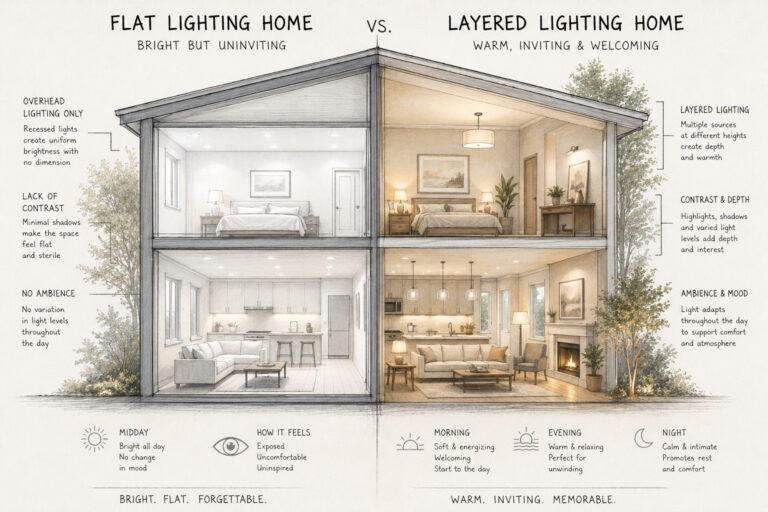
Professional lighting designers rely on a simple principle called layered lighting.
Instead of relying on a single light source, good design uses three types of lighting working together.
Ambient Lighting
Ambient lighting provides the general illumination for a room. It’s the base layer that allows people to move safely and comfortably throughout the space.
Common ambient lighting fixtures include:
- Recessed downlights
- Ceiling-mounted lights
- Large pendant fixtures
- Indirect cove lighting
Ambient lighting should be soft and evenly distributed. If it’s too bright or concentrated in one area, the room can feel harsh and uncomfortable.
Task Lighting
Task lighting focuses on specific activities that require better visibility.
Examples include:
- Kitchen bench lighting for food preparation
- Reading lamps beside a chair or bed
- Bathroom mirror lighting
- Desk lighting for workspaces
Without task lighting, people often rely on overly bright general lighting to compensate — which leads to glare and eye strain.
Accent Lighting
Accent lighting adds visual interest and drama to a room.
This layer highlights specific elements such as:
- Artwork
- Shelving displays
- Architectural niches
- Feature walls
- Textured materials
Accent lighting helps create depth and character in a home. Without it, spaces can feel flat and uninspired.
Types of Light Fixtures for Residential Spaces
Understanding different lighting fixtures helps homeowners choose the right solution for each space.
Recessed Downlights
Downlights are one of the most common residential fixtures.
They provide clean, minimal lighting and work well for:
- Hallways
- Kitchens
- Living areas
- Bathrooms
However, relying solely on downlights often leads to flat, uninteresting and harsh lighting.
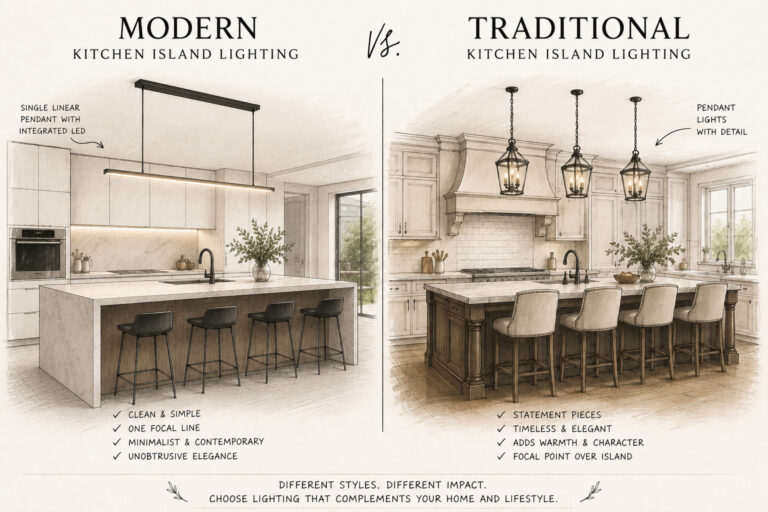
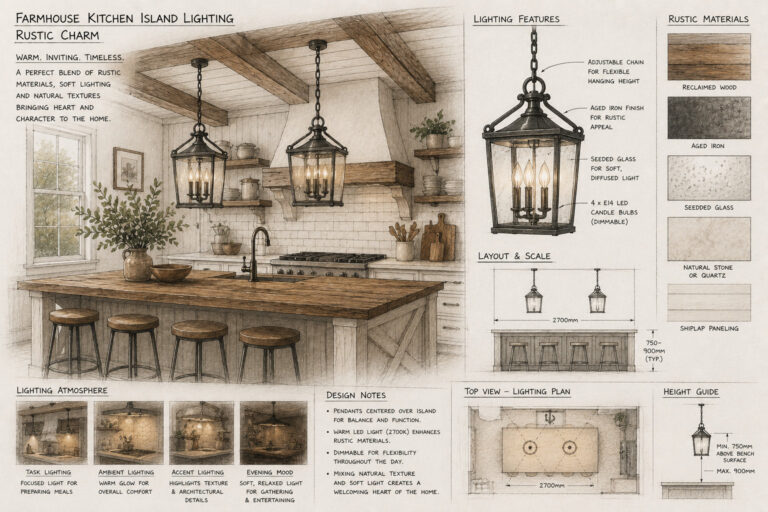
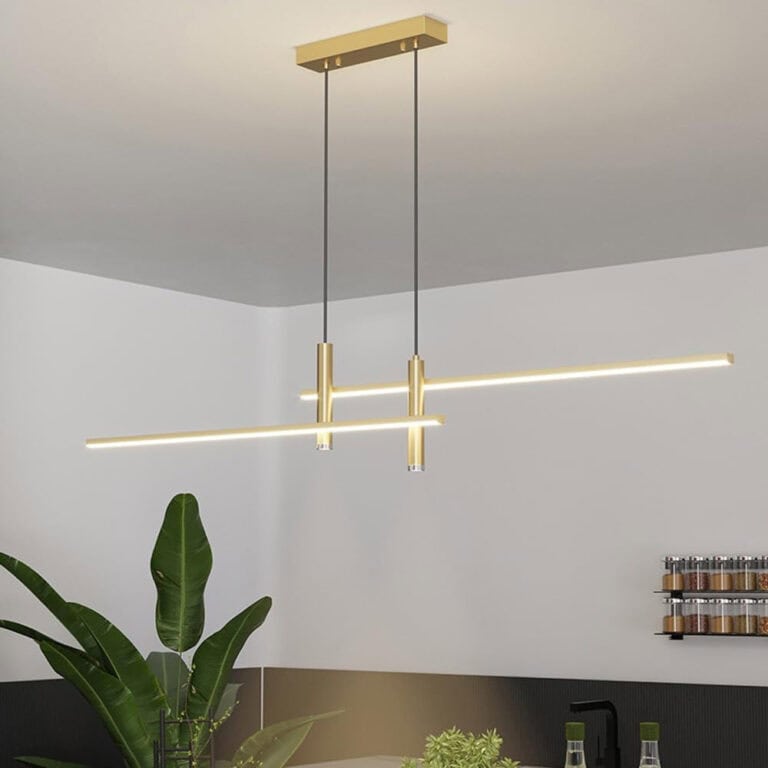
Pendant Lights
Pendant lights hang from the ceiling and serve as decorative focal points. Pendants are also the decorative part of lighting, which enhances your space.
They are commonly used over:
- Kitchen islands
- Dining tables
- Entryways
Pendant lighting adds character while also providing useful illumination. Pendant Lighting can be the defining piece for any design
Chandeliers
Chandeliers are statement fixtures often used in:
- Dining rooms
- Stairwells
- Entry halls
They add elegance and help define important spaces in a home. If you have the space, a stairwell or void, chandeliers come in all styles, modern, traditional, eclectic, and rustic.
Wall Sconces
Wall sconces provide soft ambient or accent lighting. The biggest hurdle with wall lighting is finding products that will actually emit enough light in the spaces you use them.
They are ideal for:
- Bedrooms
- Hallways
- Bathrooms
- Living rooms
Sconces help create warmth and visual depth. And in most designs, they will provide the final layer to a thorough Lighting Design.
Under-Cabinet Lighting
Under-cabinet lighting is one of the most practical lighting solutions in kitchens.
It provides direct task lighting for:
- Food preparation
- Cooking surfaces
- Kitchen benches
I always recommend that the cabinet maker install all the undercabinet lighting, as they will do a professional finish to the lighting. It will be recessed into the cabinets for a flush finish.
Room-by-Room Residential Lighting Design Guide
One of the biggest mistakes homeowners make is leaving lighting decisions until the end of a renovation.
Lighting should be planned early in the design process, ideally at the same time as the floor plan and electrical layout.
Here are the key steps.
Start With the Room’s Function
Every lighting plan begins with understanding how the space will be used.
For example:
A kitchen requires strong task lighting for food preparation.
A living room needs flexible lighting for relaxing, entertaining, or watching television.
A bedroom should feel calm and restful, with softer lighting.
Once the purpose of the room is clear, it becomes much easier to design appropriate lighting.
Consider Lighting Placement
Placement matters just as much as the fixture itself.
Downlights should be positioned carefully to avoid:
- Shadows on kitchen benches
- Harsh glare in living areas
- Uneven lighting across ceilings
Spacing is critical. Poorly spaced lights often create a “runway effect” or leave areas underlit.
Professional designers usually follow spacing guidelines based on ceiling height and room size.
Plan Lighting Controls
Modern homes benefit greatly from flexible lighting control.
This includes:
- Dimmers to adjust brightness
- Multiple circuits for layered lighting
- Smart switches or automation systems
With the right controls, a single room can transform from bright functional lighting during the day to warm ambient lighting in the evening.
Choosing the Right Colour Temperature and Bulb Type
The colour temperature is the icing on the cake when it comes to lighting design. It creates the feel of any given space.
And the bulb you choose can either enhance or detract from the feel and atmosphere you are trying to create.
I have other blog posts that cover this topic more thoroughly here
Lighting Design Tips from Interior Design Professionals
- Always install dimmer switches — they’re the single best upgrade you can make
- Layer your lighting before selecting furniture or paint colors
- Don’t rely solely on a single ceiling fixture in any room
- Think about natural light and how artificial light complements it at night
- Use lighting to define zones in open-plan living spaces
- Avoid common mistakes: overlighting, underlighting, and mismatched color temperatures
How to Plan and Budget Your Residential Lighting Design Project
- Steps to creating a lighting plan: room mapping, fixture count, switch placement
- Working with a lighting designer vs. DIY planning
- Average costs for residential lighting design by room and fixture type
- Prioritizing where to invest vs. where to save
- Tips for phasing a lighting upgrade over time without full renovation
- Hiring an electrician: what to ask and what to expect
Conclusion
Great residential lighting design isn’t a luxury — it’s a necessity if you want all your work to look finished.
The right lighting strategy elevates every room, enhances your daily experience, and adds genuine value to your home. From understanding the three core lighting layers to choosing the right fixtures, color temperatures, and smart systems, you now have a comprehensive roadmap to transform any space.
Start small if you need to. Swap out a harsh overhead bulb for a warm-toned LED. Add a floor lamp to a dark corner.
Install a dimmer switch in your living room. These little changes add up fast — and once you see the difference, you’ll never look at lighting the same way again. Ready to get started?
Begin with one room, apply the principles in this guide, and watch your home come to life!