The Impact of Lighting on Paint Colours: What You Need to Know Today in 2024

Ever walked into a room and thought, “Wait, didn’t I paint this a different colour?” You’re not going crazy – it’s all about the light and the effect of lighting on paint colours!
Did you know that the same paint colour can look dramatically different under various lighting conditions? In fact, studies show that up to 70% of our perception of colour is influenced by the light source!
Whether you’re a DIY enthusiast or a professional designer, understanding the intricate dance between lighting and paint colours is crucial for creating the perfect ambiance in any space.
In this guide, we’ll shed some light (pun intended!) on this fascinating interplay and help you make informed decisions for your next painting project. Let’s dive in and unravel the mysteries of how lighting can make or break your colour choices!
The Science Behind Lighting and Colour Perception
- Light affects colour visibility in ways we do not realise most of the time.
– The colour rendering index (CRI) is how we measure how close to natural sunlight a particular light source is. This is important especially when it comes to paint colours and surfaces that will be affected by that light source.
– Colours can appear different under various light sources depending on the base colour. for example: a white which has a blue/grey base will look bluer under a cool white light, where as under a warm white light it will look softer. I always recommend that a client buys a downlight which is plug and play and has the tri colour option, to try out with any colour choices they are trying to choose.
Their Effects of Types of Lighting on Paint Colours
– Natural light: It changes throughout the day and seasons from soft warm to bright cool depending on the time of day and which season you are in.
– Incandescent lighting: creates a warm, yellowish glow but is very energy inefficient.
– Fluorescent lighting: cool tones and potential colour distortion. This is the worlds first foray into energy efficiency but has its limitations and has certain dangerous components to it. (Mercury)
– LED lighting: versatility and energy efficiency in colour rendering, LED can do it all the products and energy efficiency are many and you can certainly find something to play with your lighting.
– Halogen lighting: bright, white light similar to natural daylight, and the artists favourite light for displaying artwork. its downfall is it does create heat and sucks the power too.
How Different Paint Finishes Interact with Lighting on Paint Colours
– Matte finishes absorb light and minimizing imperfections, there is also minimum reflection from a matt finish.
– Eggshell and satin finishes have a subtle reflection and durability, a satin finish will soften a space with its soft reflection.
– Semi-gloss and gloss finishes have high light reflection and drama, great for drawing attention to a feature or space.
I personally believe that gloss surfaces in a kitchen are easier to keep clean (just my opinion).
Choosing the Right Paint Colours for Various Lighting Conditions
– North-facing rooms: working with cool, bluish light means you can use the warmer tones think also vibrant reds and greens and yellows
– South-facing rooms: embracing warm, golden hues, you would lean towards the blues and cool based whites to add brightness.
– East and west-facing rooms: adapting to changing light throughout the day means you have flexibility white your colour choices.
– Rooms with minimal natural light: to create illusions of brightness I would lean towards warm whites, cool white can give a sterile feel if no natural light.
The LRV Factor: Understanding Light Reflectance Value
– Definition and importance of LRV in paint selection. The space where this would matter most would be in hallways and stairwells. Because of the narrow spaces you will want the light to reflect of the walls to make the space feel bigger.
– Use LRV to predict a colour’s appearance in different lighting, comes into play most often when you have gloss surfaces and or task areas, where there is a standard for how much light you will need in that area.
Common Mistakes to Avoid When Selecting Paint Colours
– Ignoring the room’s primary light source would be completely ignoring the effect of lighting on paint colours altogether. And is something you may not realise until all is said and done, and then you try to fix it.
– Failing to test paint samples in various lighting conditions. This is where painting different walls different shades and then looking at them at different times of the day will show you the different variations on each colour.
I am sure that most people when they see lots of different paint colours up on a wall are thinking “Can’t these people make up their minds?” when they are just making sure they get the right shade for that room.
– Overlooking the impact of adjacent room colours on light reflection. You need to be aware of what is in your line of sight and does that affect your colour choice?
Pro Tips for Testing Paint Colours in Your Space
– Creating large sample swatches on poster board and moving the board around the room at different times of the day.
– Observing colours at different times of day and under various light sources
– Using digital tools and apps for virtual colour testing most retail stores and online have tools you can use for free to help your selections.
Lighting Tricks to Enhance Your Paint Colours
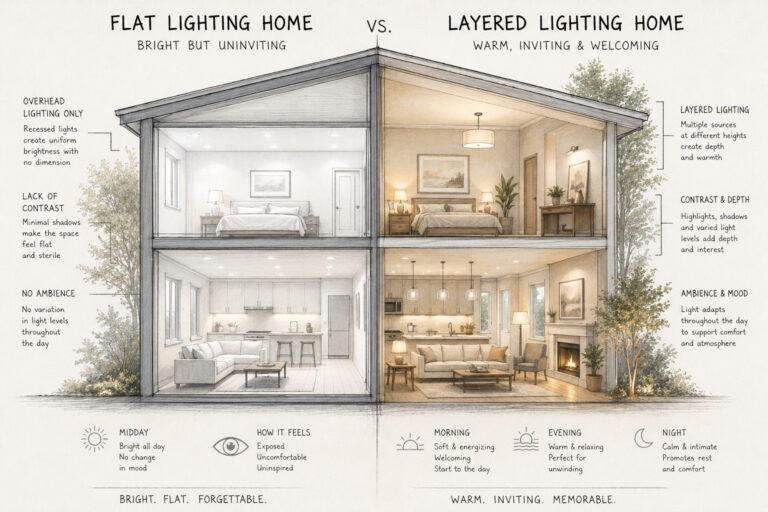
– Using directional lighting to highlight specific wall areas. Accent lighting to highlight a feature wall.
– Implementing dimmers for flexibility in colour appearance gives you that control of your lighting to create the mood of your choice.
– Balancing artificial light colours with paint undertones. Testing your lighting on paint colours is the only way, Test Test.
– Sometimes it can be the products. as nowadays you can get downlights that have tri colour options either at the light switch or on the light itself.
The Psychology of Lighting and Colour Combinations
– Lighting and colour pairings affect mood and productivity all the time and we don’t even realise it. Think of a space or home you walk into and think wow this feels great I love this space, and there is nothing specific you can put your finger on but how it makes you feel.
The power of Lighting on Paint Colours.
– Creating specific atmospheres through strategic lighting and paint choices is the whole point of creating a Lighting Plan/Design for any new build or renovation. And the best way to maximise is to employ a professional.
– Cultural considerations need to be considered in lighting and colour preferences when applicable.
And there you have it, folks! The fascinating world where lighting and paint colours collide.
Armed with this knowledge, you’re now ready to tackle any painting project with confidence. Remember, the perfect paint colour is just half the battle – the right lighting on paint colours is what brings it to life.
So, next time you’re scratching your head over why that “perfect” grey suddenly looks green, you’ll know exactly what to do. Don’t be afraid to experiment, test, and play with different lighting scenarios.
After all, your home is your canvas, and with the right combination of paint and light, you can create a masterpiece that’s uniquely you. Now go forth and paint with illuminated wisdom!