Avoid These 7 Common Lighting Mistakes: Brighten Your Home Like a Pro in 2024


Uh-oh, is that a lighting faux pas I see? Don’t worry, you’re not alone! Did you know that according to a survey by the American Lighting Association, 80% of homeowners admit to making at least some common lighting mistakes in their homes? Yikes!
But here’s the bright side (pun intended): with a little know-how, these blunders are easy to fix. Lighting isn’t just about keeping the monsters under the bed at bay – it’s an art form that can make or break your space.
From mood-killing glare to energy-wasting setups, we’re about to shed light on the top 10 lighting mistakes that might be lurking in your home right now. Ready to flip the switch on these illumination errors? Let’s dive in and turn those lighting lemons into lemonade!
The Single Overhead Syndrome: One Light to Rule Them All? One of Many Common Lighting Mistakes
• Why relying on a single ceiling light is a rookie mistake
You can never light a whole room properly from just one fixture no matter how bright it is. Creating a lighting plan solves this issue for you.
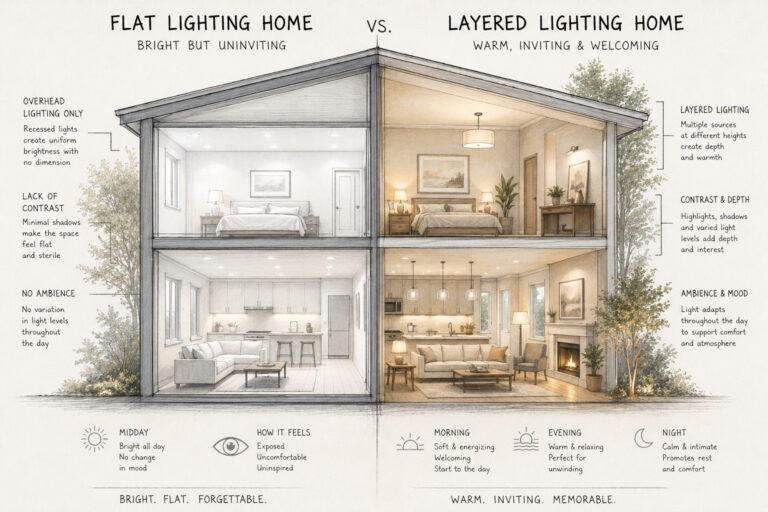
• The importance of layered lighting (ambient, task, and accent)
Layered lighting means adding recessed downlights, wall sconces or lamps. This is what gives your space depth and atmosphere.
• Creating depth and dimension with multiple light sources
Using layered lighting will add so much to your space. Light up a corner, illuminate a piece of art
• Easy fixes: adding table lamps, floor lamps, and wall sconces
The easy adds are the lamps, floor or table. You have flexibility to move them where you need them and they add character to your space too.
Size Matters: When Fixtures Don’t Fit the Space
• How undersized or oversized fixtures throw off room proportions
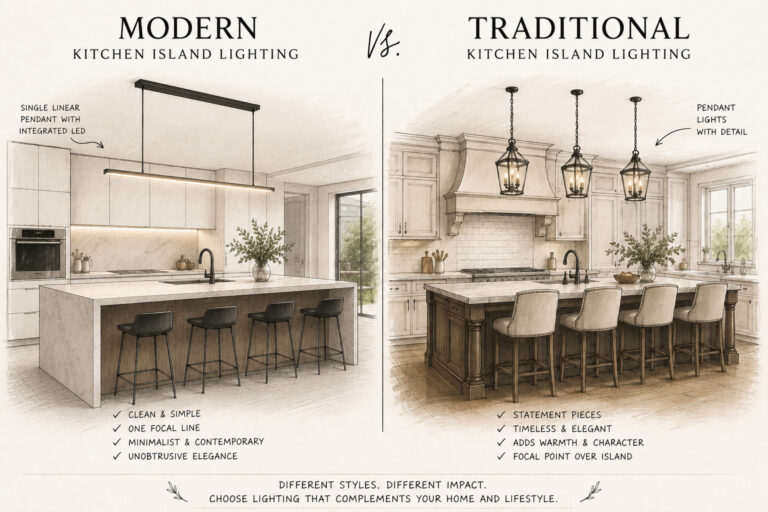
Putting one tiny light in a large space will look like you can’t afford to light your home. Similarly putting too big a fixture can be one of many common lighting mistakes too. It is all about proportion, making sure your light fixture is the correct proportion to your space.
• Guidelines for choosing the right size lights for different areas
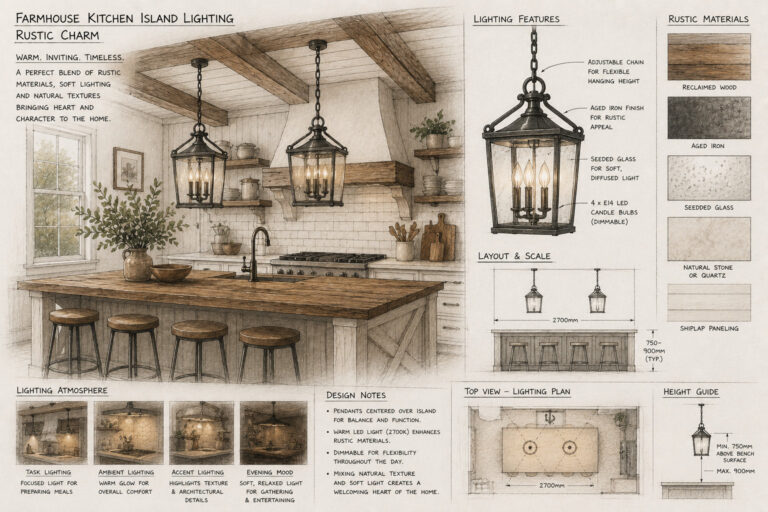
Measure, Measure Measure. Alternatively go to a lighting store space out your room size and cast an eye in the displays to gauge what size feels right for your sized space.
• Calculating the ideal chandelier size for dining rooms and entryways
For chandeliers it is all about your ceiling height. All product listings will have the fixture size, but remember that size does not include the suspension.
Would you be happy if your chandelier only had a very short suspension. It pays to measure again.
• Tips for scaling lighting in open-concept spaces
When dealing with a large open concept space, I will measure out the floor size and ceiling heights in the store. Most customers have trouble visualizing their space as it is usually just lines on a plan.
This can make it more real to them and usually they realise how large or small their fixtures will need to be. Sometimes it can mean more fixtures in a smaller size so they have the suspension they want.
The Shadowy Kitchen: Cutting Corners in Task Lighting
• Why under-cabinet lighting is a must-have, not a luxury
They provide soft lighting for evenings taking away the need for bright overhead lighting.
• Eliminating shadows on workspaces for safety and functionality
The undercabinet lighting will also provide nice bright lighting on your benches, providing safe workspaces and increases the functionality of your kitchen lighting.
• Options for retrofitting existing kitchens with task lighting
There is always stick-on, rechargeable and battery operated under cabinet lights available too.
• Smart lighting solutions for adaptive kitchen illumination
Voice activation for your kitchen lighting would be quite practical. Imagine arriving home and carrying in handfuls of groceries and its dark. You wont have to fumble for the light switch you can just say “google turn on kitchen lights” so cool.
Bathroom Blunders: Unflattering Vanity Lighting
• The pitfalls of overhead-only bathroom lighting
Shadows, a nightmare when using your mirror if you can’t actually see your face properly.
• Proper placement of vanity lights to minimize shadows
Vanity lights for best results should be mounted either side of your mirrors at head height. Alternatively if you have a wall to wall mirror, the lighting should be mounted above the mirror to be aimed directly at the mirror for the light to reflect off the mirror onto your face.
This can also be achieved with a gimbled downlight angled to the mirror too.
• Colour temperature considerations for accurate grooming and Avoiding Common Lighting Mistakes
There is a lot of misinformation out there about what colour temperature is best for putting on make up.
I have been in the lighting business for ten years and one of my daughters has been a professional makeup artist for 15 years.
Recommendations are: for putting on day to day make up you need warm white 3000k. and you can get really bright (Lumens) if you need a lot of light and no natural light. Reason is the CRI (Colour rendering Index) is closest to natural sunlight.
But if doing make up for professional shoots you will need cool white 4000k as the flash will drain colour from your face so you need to have heavier makeup to look alive.
If you use cool white or fluorescent lights to put on every day make up the result will be a more orange look to your face in natural lighting.
That is the standard recommendations but you can exercise your personal preference too. It is your home so do what suits you.
• Waterproof lighting options for shower and tub areas
This will require IP rated products. Also when it comes to wet areas there is an exclusion zone for 24volt wired in lighting. Rule of thumb is “you can’t stand in a body of water and touch the light fixture whether hanging or on a wall.
The Dimmer Dilemma: Overlooking Control Options
• Why every room benefits from adjustable lighting
Because every room does not have the same amount of natural light and or function. so being able to adjust your lighting to what you are doing at any given time can be a game changer.
• Types of dimmers and their compatibility with different bulbs
You can use any brand of dimmer on any dimmable globe in a light fixture. But when it comes to LED Downlights you need to make sure you use a compatible dimmer for the LED Downlight otherwise you may get flickering or you may not get the ability to fully dim the product.
You just need to check your product for what dimmers are compatible.
• Smart dimming solutions for customized lighting scenes
Using a smart system to dim your lighting can be a very effective solution. I had the pleasure of helping a client set up his home lighting that was going to be controlled by a very expensive smart system that was a whole house automation system. Very expensive.
All we needed to make sure, was that all the lighting fixtures were dimmable or had dimmable light bulbs in them to let the system work properly. It was fantastic to see finished.
• Energy-saving benefits of dimmable lighting
Are achievable as when you dim a fixture or bulb it will use less power. The most power is used when turning lights on so if you are dimming rather than turning off then back on again you will be saving power.
Colour Temperature Confusion: When Warm Clashes with Cool
• Understanding the Kelvin scale and its impact on ambiance
As a Lighting Designer I am able to pick instantly where about on the kelvin scale a light source may be. But not all of us are aware enter the Kelvin scale.
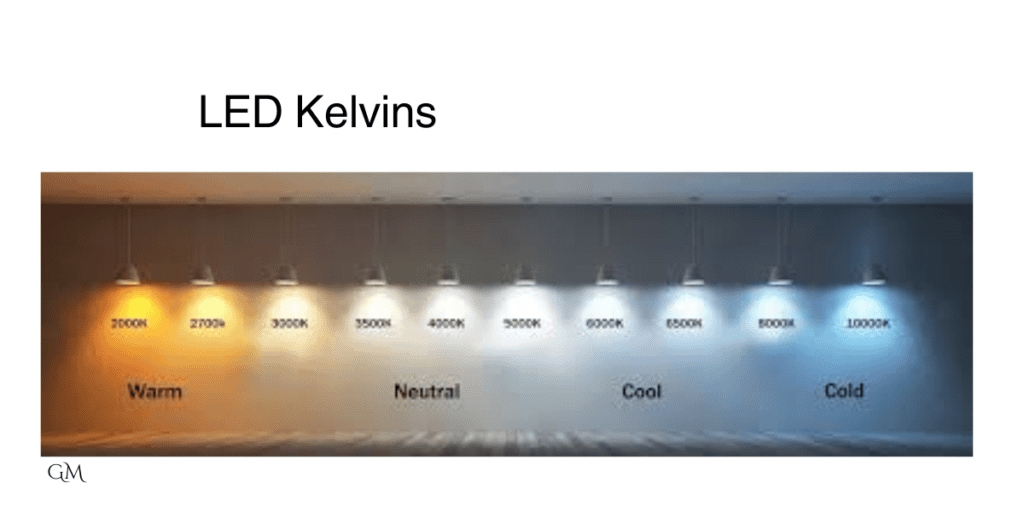
• Choosing the right colour temperature for different activities and moods
One of the most common lighting mistakes I see when visiting a clients home, is the wrong colour of lighting in the wrong place.
You just need to match the activity of the space to the right lighting to complement that space.
• Creating harmony with consistent colour temperatures throughout a space to avoid common lighting mistakes
It can be something as simple as checking the product before you purchase to make sure they are all the same kelvins.
• Using tuneable white lights for flexibility
This is a smart bulb feature to be able to change the colour of a white bulb will give you that flexibility to change at will.
The Energy Drain: Inefficient Bulbs and Fixtures
• The hidden costs of outdated lighting technology
Hanging on to outdated lighting technology can end up costing you a lot of money. Like appliances, the technology in lighting advances and all over the world we are encouraged to be energy efficient the technology is incrementally achieving more efficiency all the time.
• Transitioning to LED: benefits beyond energy savings
I think this is a no brainer. To switch out any existing lighting to LED is the way to go.
• Smart lighting features that optimize energy use
I have covered Dimmers and smart systems. But I think where smart systems come into their own can be with scheduling. Scheduling can be an inbuilt security when away from home as well as turning things on just before you get home.
By not having your lights on unnecessarily you will save power.
• Calculating the long-term savings of efficient lighting choices
This is hard to quantify without getting technical. But personally when I changed 12 of my 80watt Halogen downlight globes for 10watt LED’s my power bill for the next quarter was half the one before.
And there you have it, folks – the top 7 lighting mistakes that might be dimming your home’s shine! But fear not, because knowledge is power, and now you’re armed with the bright ideas to transform your space from a lighting mishap to a luminous masterpiece.
Remember, great lighting isn’t just about seeing better; it’s about feeling better, living better, and showcasing your home in its best light (literally). So why settle for a dim situation when you can create a brilliantly lit haven? Whether you’re tackling one room at a time or planning a whole-home lighting overhaul, there’s no better time than now to switch things up.
Ready to light up your life the right way? Let’s make 2024 the year your home truly shines – without a lighting mistake in sight!