Farmhouse Kitchen Island Lighting: Rustic Charm for Your Home

Imagine walking into a kitchen where vintage-inspired pendant lights cast warm, welcoming shadows across your island – that’s the magic of farmhouse Kitchen Island Lighting!
With farmhouse-style kitchens seeing a remarkable 78% increase in popularity on home design platforms this year, it’s clear this trend isn’t just a passing fad. I’ve spent years helping homeowners perfect their kitchen lighting, and I can tell you that the right farmhouse fixtures can completely transform your space!
In this guide, I’ll share professional insights on selecting, positioning, and styling farmhouse kitchen island lighting that perfectly balances rustic charm with modern functionality.
Essential Farmhouse Kitchen Island Lighting Styles
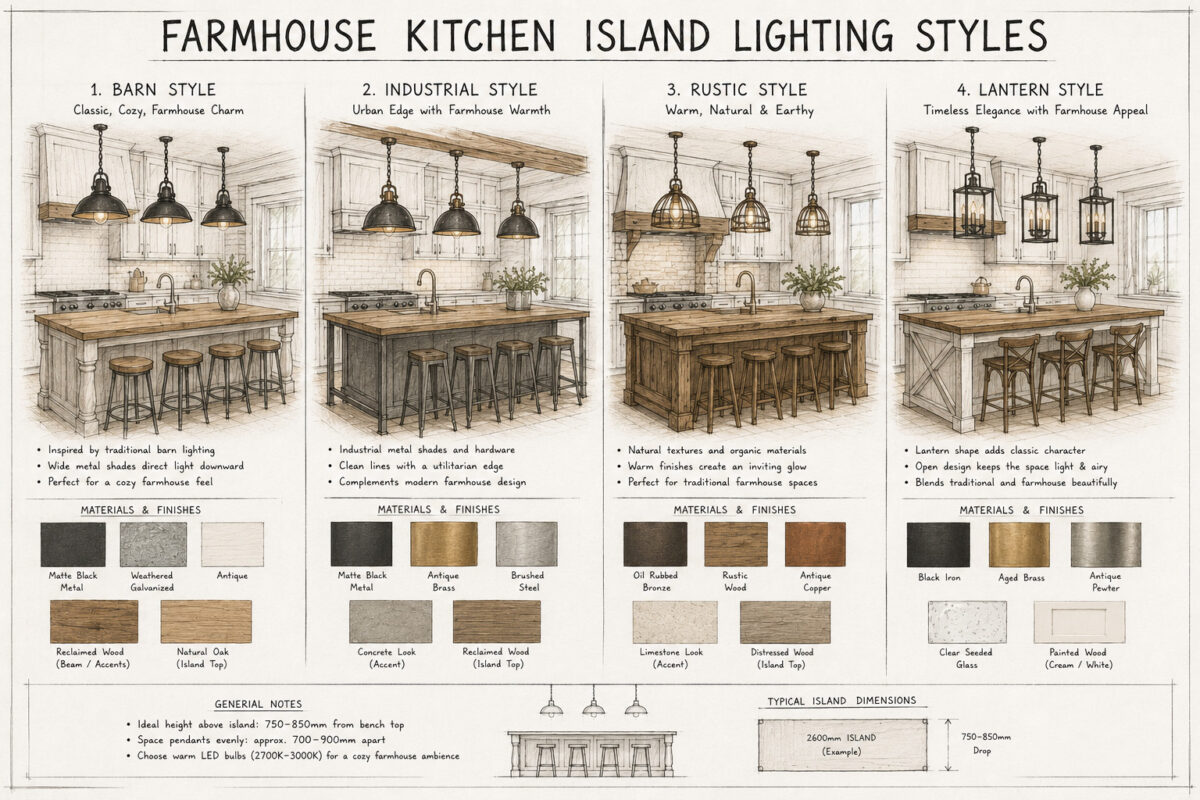
As a Designer for a client, I went down a proper rabbit hole trying to figure out what “farmhouse style” even meant for lighting. Turns out there are heaps of options, and not all of them actually nail that rustic charm everyone’s after. Remember, personal taste can help you here
Classic barn light designs were where I started, mostly because they’re iconic and pretty much synonymous with farmhouse kitchens at this point. These are typically a metal dome shade, often in black or galvanized steel, with the light source pointing straight down. I went with a 350mm barn light pendant over our island, fitted with a 9-watt LED that put out about 800 lumens, warm and golden rather than stark white.
Industrial-inspired pendants are sort of the cousin to barn lights, and honestly I almost went this route instead. Think exposed bulb cages, black iron piping, that whole reclaimed-warehouse aesthetic. The thing is, industrial pendants can skew a bit cold and severe if you’re not careful, so I’d recommend pairing them with warmer 2700K bulbs to soften them up for a farmhouse feel rather than full factory vibe.
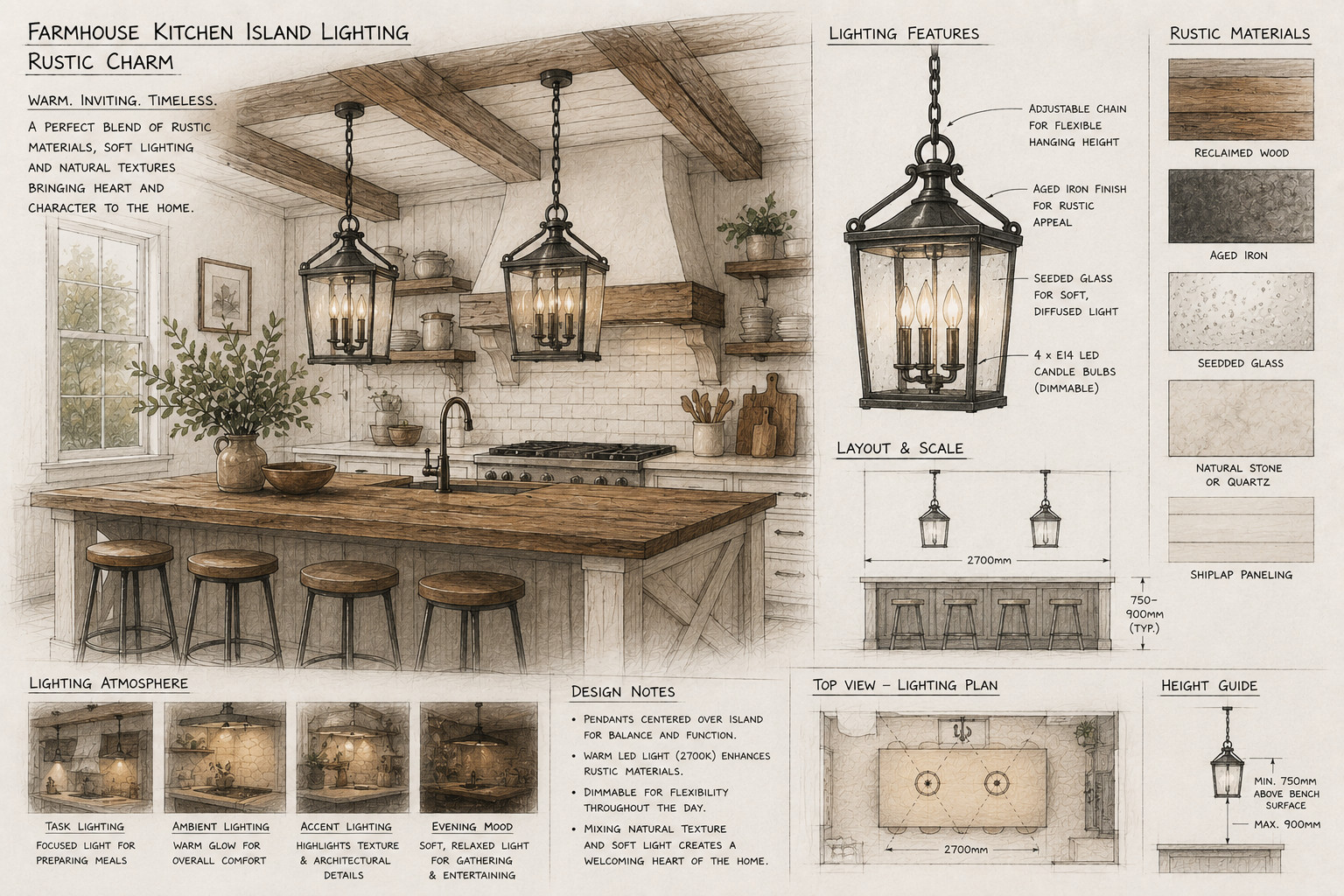
Rustic chandeliers were a genuine surprise, because we always picture chandeliers as fancy and formal. Farmhouse versions are different beasts entirely, usually made from wrought iron or even reclaimed wood with multiple candle-style bulbs. We actually installed a small one above an island, only five lights, and it added this unexpected elegance without feeling like it belonged in a ballroom.
Lantern-style fixtures are probably the most “farmhouse” of the bunch if I’m honest, evoking old-school oil lanterns that used to hang in actual barns. One has a black metal frame with seeded glass panels, which diffuses the light in this lovely uneven way. They’re particularly good for kitchens with lower ceilings, since lanterns tend to sit a bit more compact than chandeliers do.
Choosing the Perfect Size and Scale for Farmhouse Kitchen Island Lighting
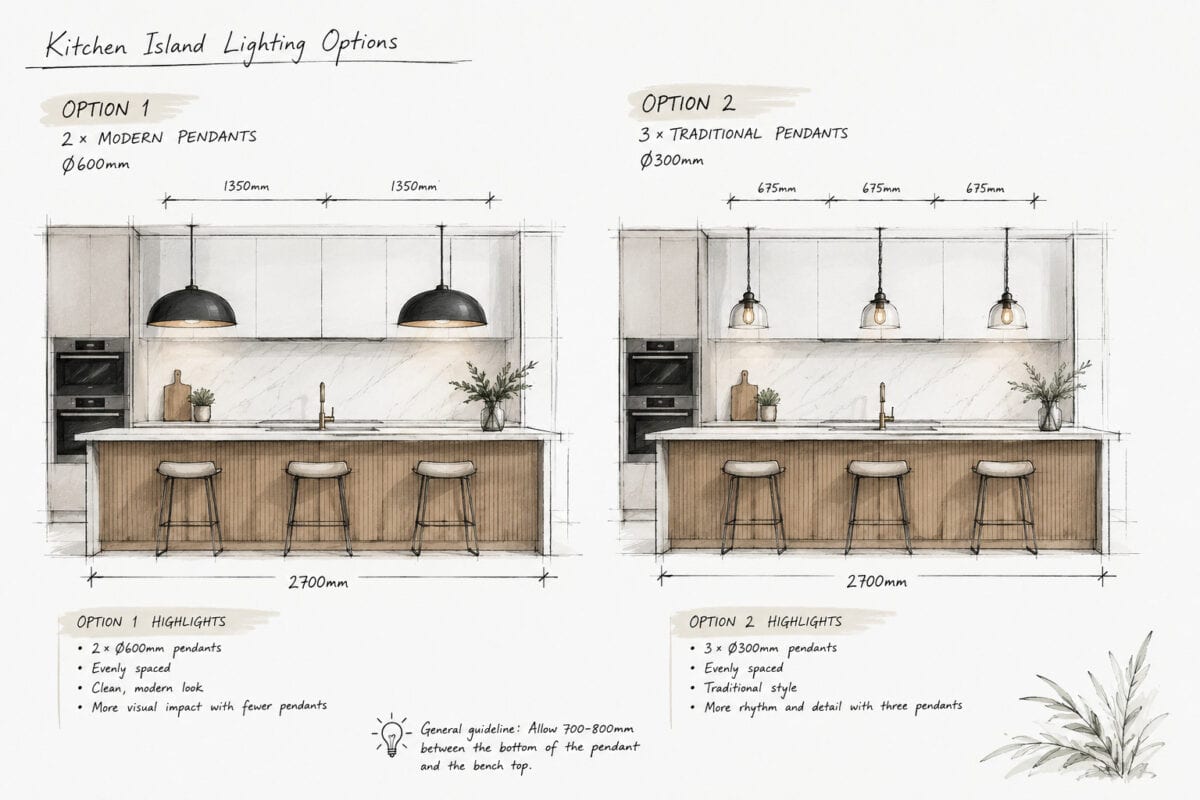
Getting the sizing right was honestly the trickiest part of our whole lighting project, way trickier than picking the actual style. I bought a pendant once that looked perfect online, hung it above our island, and it looked like a tiny pea floating in a paddock. Lesson learned the hard way, so let’s talk numbers.
Scale considerations for room size matter more than people realize, and it’s not just about the island itself. A massive farmhouse kitchen with high ceilings can handle bigger, bolder fixtures without them feeling overwhelming, but in smaller kitchens those same fixtures can swallow the whole room. I’d always recommend stepping back and looking at the island within the context of the entire kitchen footprint, not just the island alone.
Ceiling height genuinely changes everything. Standard 8-foot ceilings need pendants that hang efficiently without eating up headroom, usually keeping total fixture height under 12 inches including the cord or rod. But if you’ve got vaulter or higher ceilings, say 10 feet or more, you can go taller and more dramatic with your fixtures, since there’s enough vertical breathing room for that farmhouse chandelier to really make a statement without looking cramped.
Popular Farmhouse Kitchen Island Lighting Materials
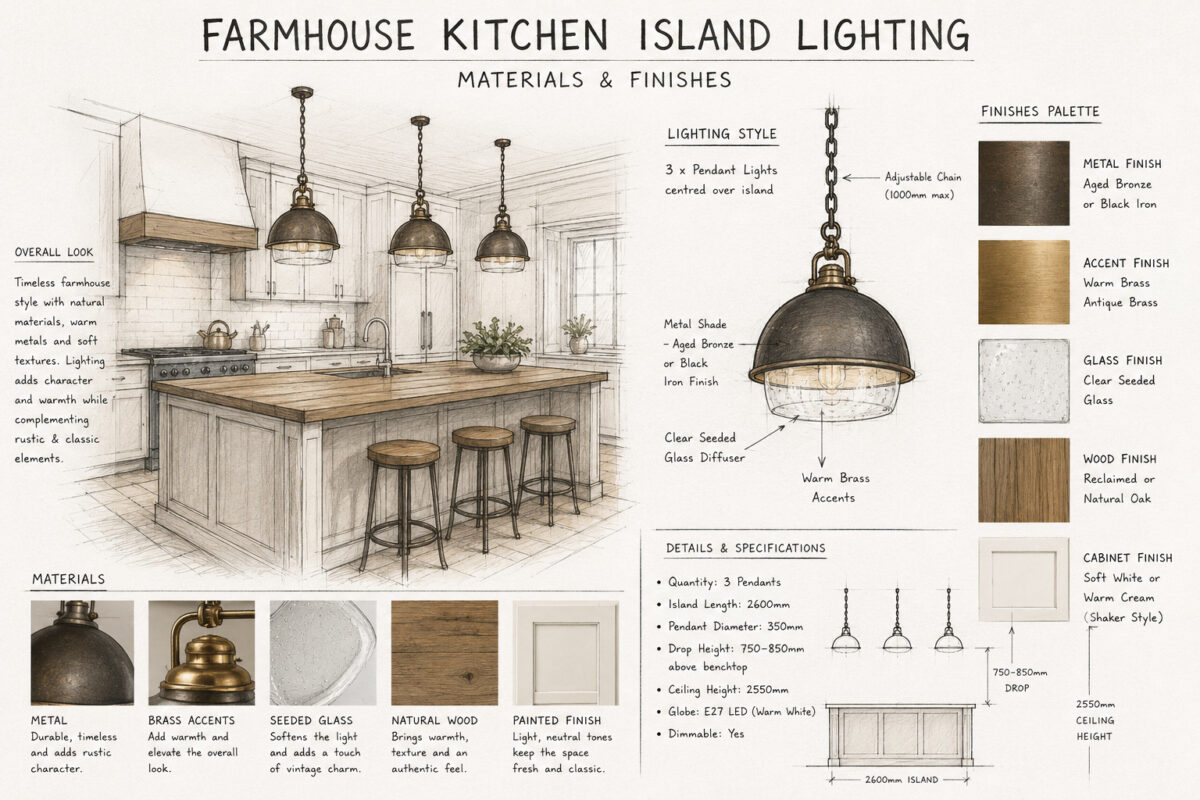
I’ll be upfront, materials is the thing I obsess over most during most renovations, probably more than is healthy.
Weathered metal finishes are basically the backbone of farmhouse lighting, and for good reason. That slightly aged, matte look in black, dark bronze, or galvanized steel just reads as authentically rustic in a way shiny chrome never could.
What I didn’t know until working in retail with products is that real weathered finishes actually age differently than painted ones, so it’s worth asking suppliers whether the finish is a genuine patina or just a powder coat meant to mimic one, because they wear very differently over time above a steamy kitchen.
Glass shade variations are where farmhouse kitchen island lighting gets its softer, warmer side, and honestly I think glass is what stops the whole style from feeling too heavy or industrial.
Seeded glass is probably the most classic choice, giving that slightly bubbly, imperfect texture that scatters light beautifully across a kitchen. Frosted glass tones things down for a more subtle glow, while clear glass with a visible Edison-style filament bulb leans more industrial, which works brilliantly if you’re mixing styles intentionally.
Wood accents are something I wasn’t expecting to love as much as I do, but there’s something about natural timber elements in a light fixture that instantly warms up a whole room.
Reclaimed wood beams used as a chandelier base, or timber canopy mounts, pairing with iron arms, add an organic texture that metal alone just can’t replicate.
One thing to watch though, is proximity to heat, since timber elements should always sit well away from the actual bulb housing to avoid any long term warping or discolouration.
Mixed metal combinations are having a real moment right now, and farmhouse style actually lends itself brilliantly to this approach since the whole aesthetic is built around collected-over-time pieces rather than a perfectly matched set.
Pairing aged brass with matte black is probably the sweet spot I see working most consistently, since the warmth of brass softens the starkness of black iron without things looking confused or overdone.
The key is keeping one metal as the dominant material, maybe around 70 percent of the fixture, and using the second as an accent rather than splitting things evenly.
Lighting Layout and Design for Farmhouse Kitchen Island Lighting
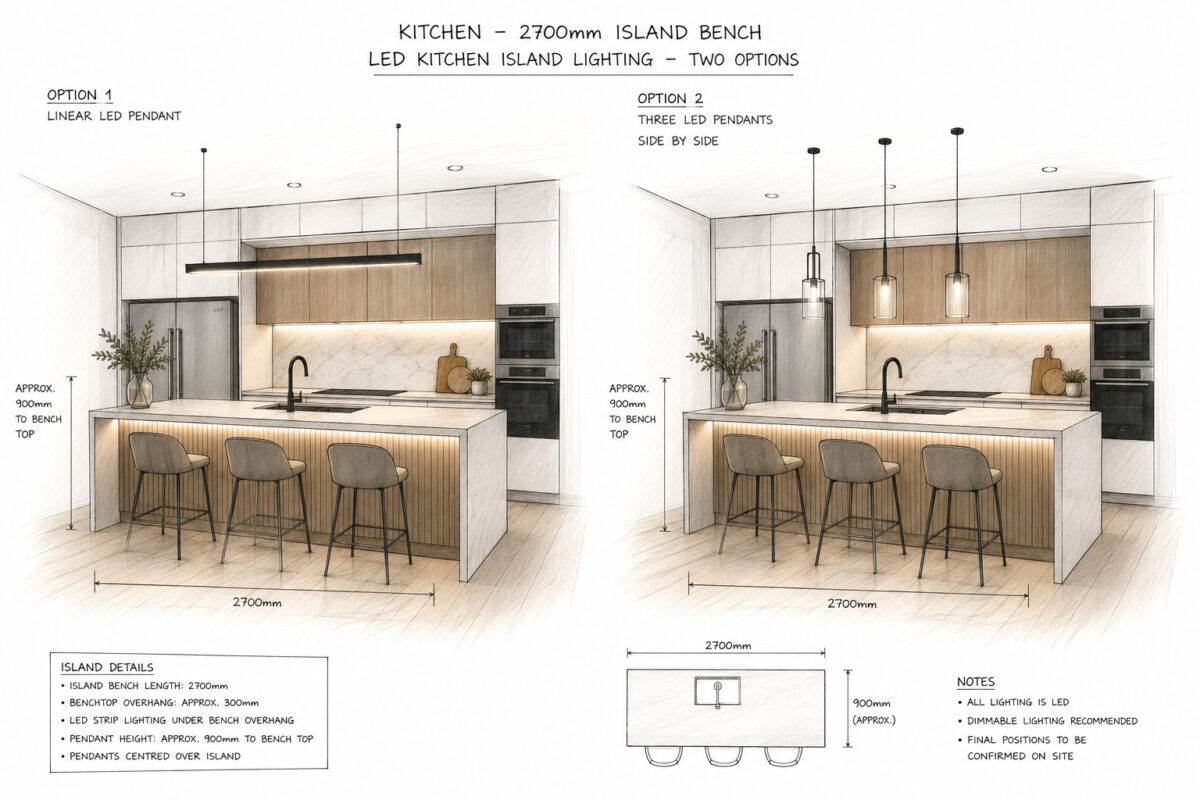
Let’s talk layout, because this is where I see people mess up the most. Seriously, I’ve walked into so many gorgeous farmhouse kitchens where the island lighting just feels… off. Usually it’s a placement problem, not a fixture problem.
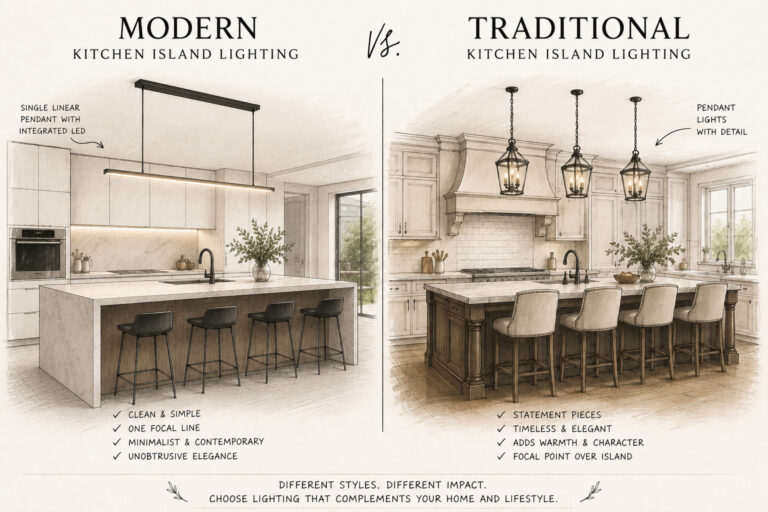
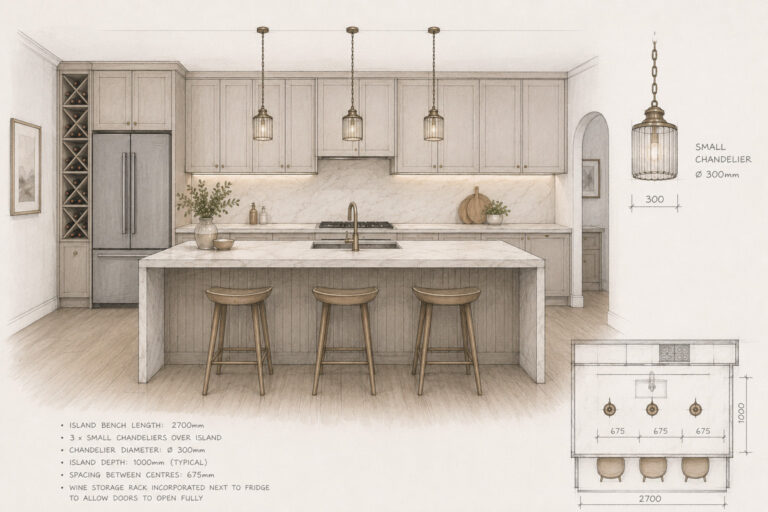
Single pendant arrangements work great over smaller islands, like anything under 6 feet long. One big lantern-style pendant, hung dead center, gives you that classic farmhouse anchor point. I made the mistake once of hanging a single pendant off-center over an island because I liked the view from the sink better than the dining side. Rookie move. It looked lopsided for two years before I finally fixed it.
For islands longer than 6 feet, you’ll usually want multi-light configurations. Two to three pendants spaced evenly is the standard here, and most designers recommend spacing them about 24 to 30 inches apart, center to center. This spreads the light out so you’re not left with dark patches at either end of your island while you’re trying to chop onions.
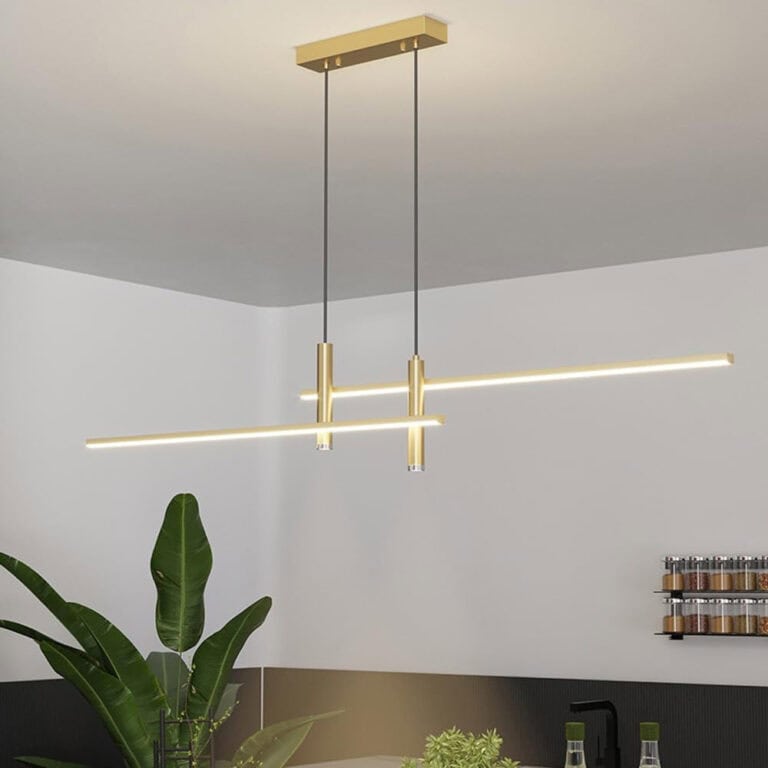
Linear suspension fixtures have gotten really popular the last few years, and honestly, I get why. A single linear fixture running the length of the island gives continuous light without the visual clutter of multiple pendants. They pair beautifully with shiplap ceilings too. It is a challenge to find a linear fixture that is within the Farmhouse kitchen Island Lighting Style.
Installation and Technical Aspects
Okay, this is the part where I always tell people: don’t wing it. It is best to have the professionals (Electrician) do the installing. Regard this post as information for you to be aware of what needs to happen to successfully install your pendants..
Proper mounting techniques start with finding your ceiling joists. Most farmhouse kitchens have standard 16-inch on-center joist spacing, but older homes can be weird about this (mine sure was). If your pendant location doesn’t line up with a joist, you’ll need a mounting bracket rated for the fixture weight.
Dimmer compatibility trips up a lot of people, especially with LED fixtures. Not all dimmers work with all bulbs, and mismatched ones cause flickering or that annoying buzzing sound. Look for dimmers specifically rated for LED loads, and check the minimum wattage requirement too.
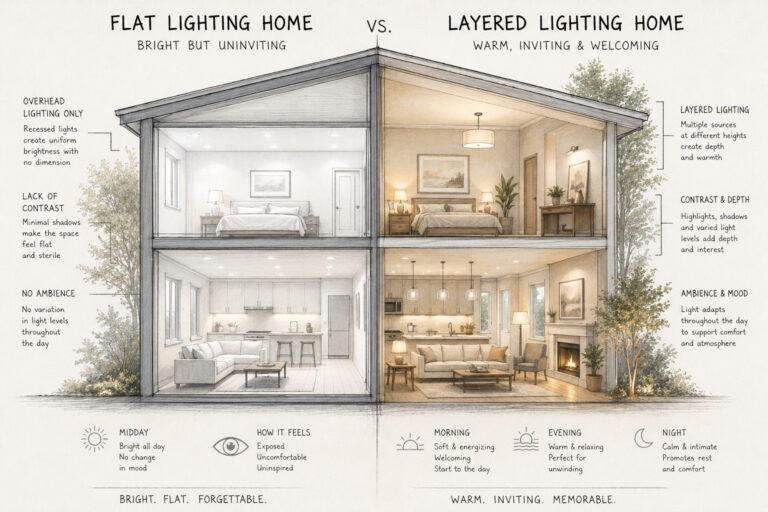
Bulb selection guidelines: for farmhouse style, warm white bulbs in the 2700K to 3000K range give you that cozy, inviting glow. Skip anything above 3500K unless you want your kitchen looking like a hospital.
Styling Your Farmhouse Kitchen Island Lighting
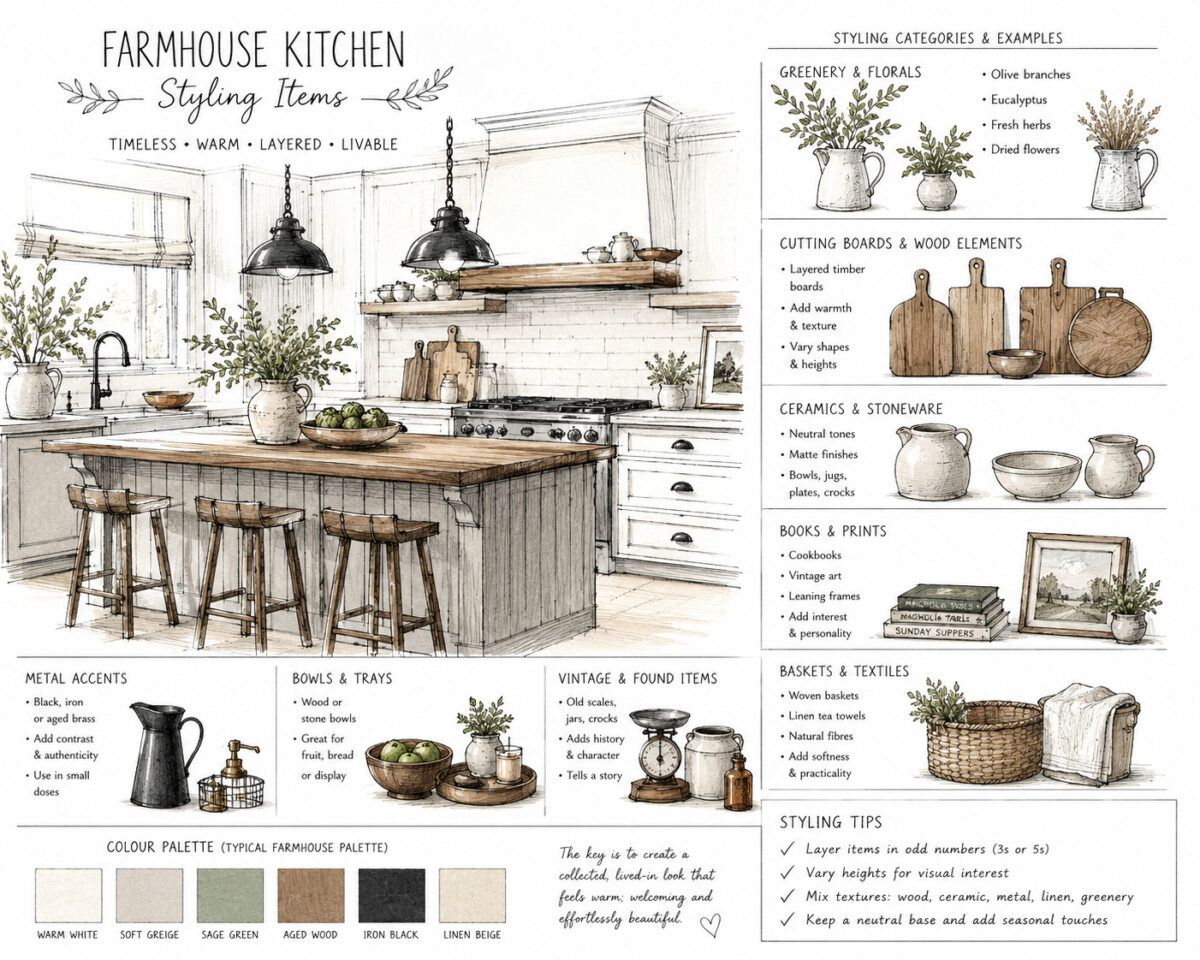
Once the lighting’s in, the fun part starts, styling around it. This is honestly my favorite part of any farmhouse kitchen project, though I’ll admit I’ve overdone it a few times.
Complementary decor elements are what tie the whole look together. Open shelving with stacked ceramic bowls, a big farmhouse sink, woven baskets for storage, these all echo that lived-in, collected-over-time feel. I’ve found that mixing in at least one antique or vintage piece, like an old scale or a wooden dough bowl, adds authenticity that new decor just can’t fake.
Color palette coordination matters more than people realize. Farmhouse kitchens usually lean on a base of whites, creams, and soft grays, with black or dark bronze accents for contrast. I made the mistake of going too matchy-matchy once, everything the same cream color, and it ended up looking flat instead of cozy. You need that contrast to make the space feel intentional.
Hardware matching tips: your pendant finish should show up somewhere else in the room, at least twice. If you’ve got black pendants, echo that in your cabinet hardware or faucet. It doesn’t need to be identical, just the same finish family. Matte black and oil-rubbed bronze play nice together, for what it’s worth.
Texture layering techniques bring depth. Think rough wood, smooth ceramic, woven textiles, and a little metal thrown in. A linen runner on the island, a chunky knit throw on a nearby bench, these small touches soften all that hard countertop and cabinetry.
Seasonal styling options let you keep things fresh without a full remodel. Swap in a few dried wheat stems or a stoneware pitcher of sunflowers for fall, then simplify down to greenery and candles for winter. Small changes, big impact.
Creating the perfect farmhouse kitchen island lighting design is about finding that sweet spot between form and function. Whether you’re drawn to classic barn lights or modern industrial pendants, the key is selecting fixtures that complement your space while providing adequate illumination. Ready to transform your kitchen island? Start by measuring your space and exploring our recommended styles to find your perfect farmhouse lighting match!