The Biggest Mistake People Make With Lighting Design

What Is the Biggest Mistake People Make With Lighting Design?
Most people think the biggest lighting mistake is choosing the wrong light colour.
It’s not.
After more than a decade working in lighting and interior design, I’ve found the real issue runs much deeper—and it’s something most homeowners don’t realise until it’s too late.
The biggest mistake people make with lighting design is not understanding how lighting should make a space feel before they start installing it.
That sounds simple, but it changes everything.
It Starts With the Wrong Assumption: “Brighter Is Better”
One of the most common things I see in homes is the belief that cool white or daylight lighting is “better” because it feels brighter.
But brighter doesn’t mean better.
Cool white lighting can make a space feel harsh, clinical, and flat. It can distort colours, make kitchens feel cold, and strip away warmth from a home.
Warm light, on the other hand, softens everything. It brings comfort. It makes food look better, surfaces feel richer, and spaces feel more inviting.
I’ve seen entire homes transformed simply by changing globes to a consistent warm tone.
One of the most dramatic examples was a rental property where every room had mixed lighting—some warm, some cool, sometimes even mixed in the same fitting. Once we standardised everything to a consistent warm light, the entire home changed. Instantly. No renovation. No rewiring. Just coherence.
The Real Problem Isn’t Colour Temperature
Here’s the truth most people miss:
It’s not usually that homes are too dark.
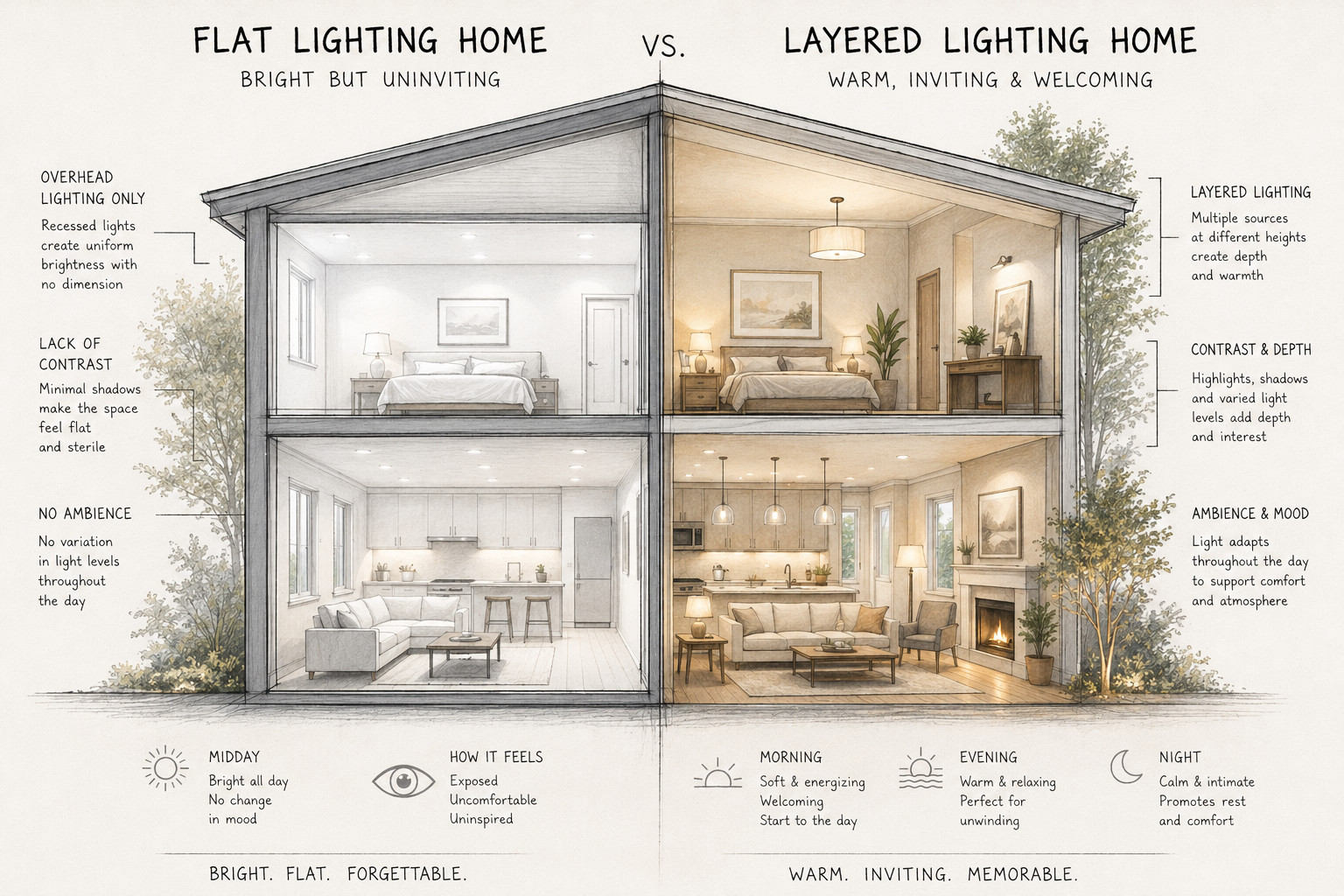
It’s that they are overlit from the ceiling with no thought for atmosphere.
Electricians do a great job focusing on safety and coverage. But that often results in one thing: a blanket of downlights that remove all depth and character from a space.
Everything becomes evenly lit. Nothing is highlighted. Nothing is softened. Nothing feels intentional.
The result?
It starts to feel like an office instead of a home.
Why Layered Lighting Changes Everything
Good lighting design is not about adding more lights.
It’s about layering:
- Downlights for general function
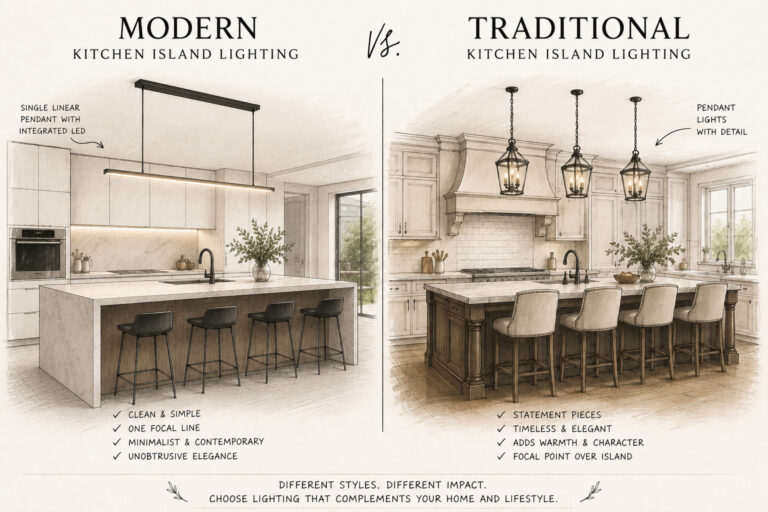
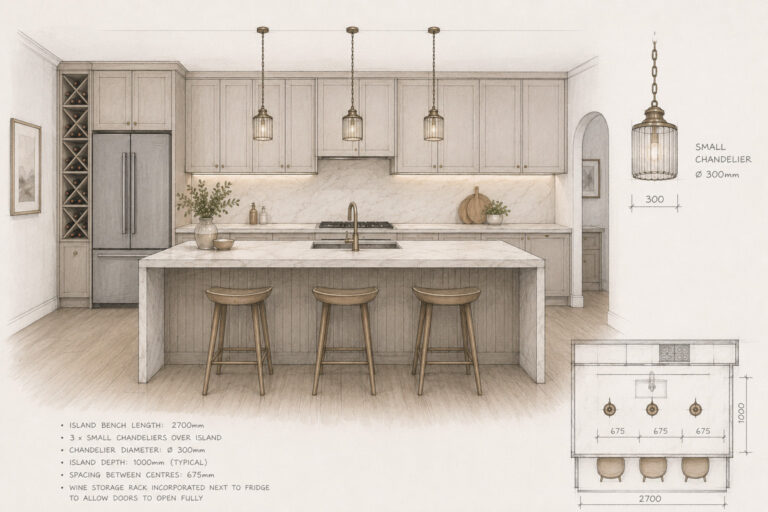
- Pendants for task and feature zones
- Wall lights for softness and depth
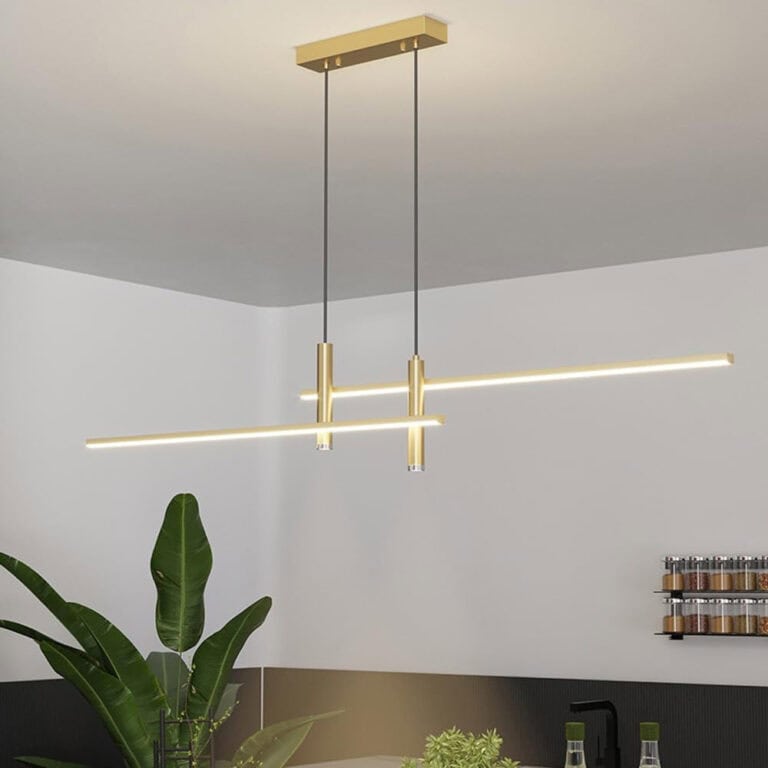
- Strip lighting for luxury and detail
- Lamps for warmth and personality
If budget allows, strip lighting is one of the most powerful tools in design. It transforms wardrobes, joinery, stairs, and shelving into something that feels considered and high-end.
But here’s the reality—most people don’t have unlimited budgets.
So the real skill is knowing what to prioritise.
Sometimes it’s not about adding more fixtures. It’s about placing fewer fixtures better.
The Detail Most People Miss
One of the most underrated ways to create a luxury feel is low-level lighting.
Step lights in hallways. Soft lighting in toilets. Subtle glow under joinery.
These are small touches, but they completely change how a home feels at night.
And lamps—often forgotten—are one of the easiest ways to add warmth and flexibility without touching the ceiling at all.
What Makes a Well-Lit Home Feel Right
You can’t always measure good lighting.
But you can feel it.
You walk in and something just feels right. Comfortable. Balanced. Calm.
It’s not about brightness. It’s about emotional response.
That feeling comes from restraint, contrast, layering, and above all—intention.
The Biggest Advice I Can Give
If I could leave homeowners with one message before they build or renovate, it would be this:
Don’t be afraid of your own instinct. Remember—it’s your home.
Too many people overthink lighting and lose sight of how they actually want to live in the space.
What To Do If You’ve Already Got It Wrong
If you’re reading this and thinking your lighting isn’t quite right, don’t panic.
You don’t always need to rip everything out.
Sometimes it’s as simple as:
- Changing a bulb
- Adjusting colour temperature
- Adding a lamp
- Replacing a single fitting
And sometimes, yes, it might need more considered changes.
The key is this: don’t guess.
Get advice. Ask someone who understands lighting design. Small changes can make a massive difference.
Good lighting isn’t about perfection.
It’s about feeling at home the moment you walk in.